Honda Civic Fuel Injector Symptoms — 1.5T, 2.0L Type R, and 1.8L
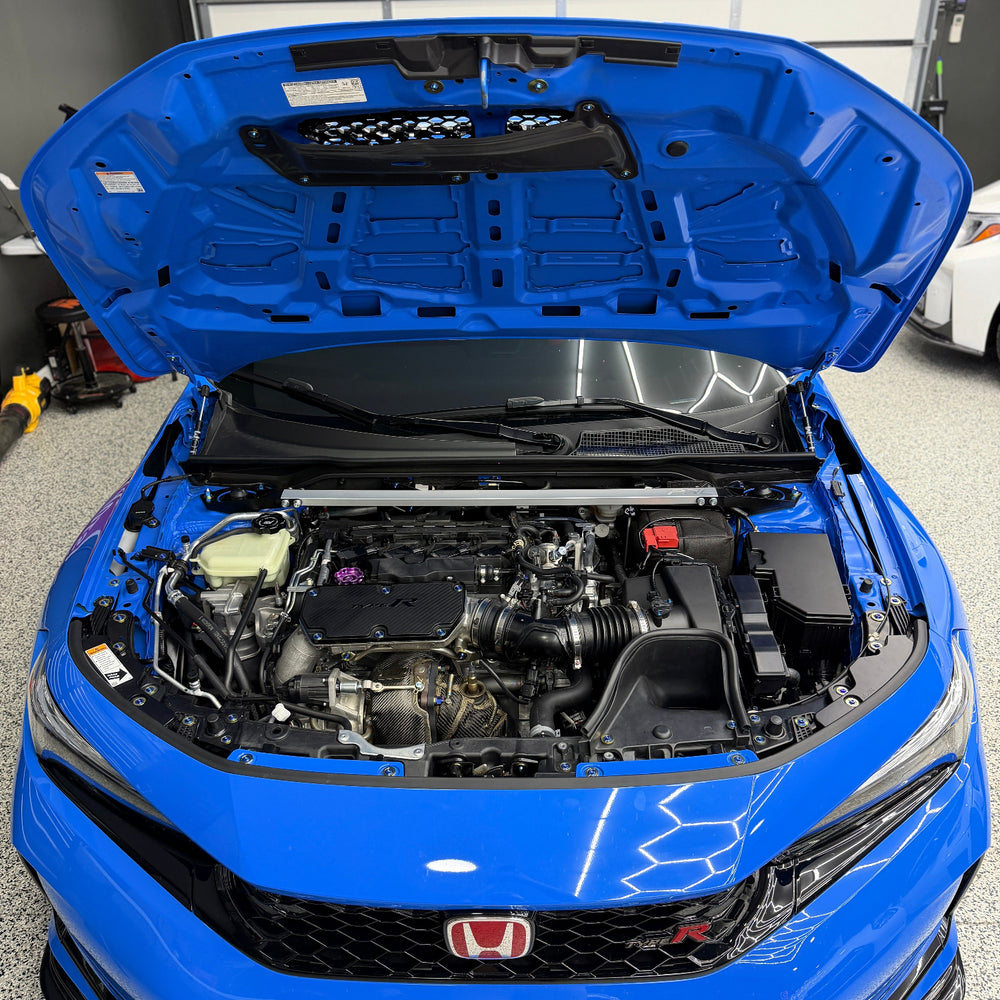
The Honda Civic uses three very different injector technologies depending on engine and year. A 2024 Civic 1.5T turbo runs direct injection at over 2,000 PSI; a 2010 Civic 1.8L runs traditional port injection at about 50 PSI; the Type R K20C1 sits in between with the highest-flow injectors of the lineup. The symptoms of failure look similar — misfires, hesitation, drop in MPG — but the diagnosis and the parts price differ significantly.
This guide covers how to recognise a failing injector on each Civic engine, how to confirm which cylinder is affected, and what replacement realistically costs in 2026.
Which Civic injector do you have?
Port injection (PFI) — 1.8L R18 and 2.0L K24 (2006–2015): low-pressure injectors mounted on the intake manifold. Easiest to access, lowest part cost, most DIY-friendly. OEM part numbers typically in the 16450- series.
Direct injection (GDI) — 1.5T L15B7 (2016+ Si, EX-T, Touring, Sport): high-pressure injectors that spray fuel directly into the cylinder. More expensive parts and more involved replacement. Susceptible to carbon buildup on the intake valves separately from injector issues.
Direct injection — 2.0L K20C1 Type R: highest-flow injectors of the Civic family, calibrated for boost. These are the most expensive Civic injectors and absolutely require matched-set replacement.
If you are not sure which engine you have, the VIN decoder confirms it in seconds. Or browse all Honda fuel injectors and use the year/model/engine selector.
Symptoms that point to a Civic injector
Civic injectors usually fail one at a time — the OBD-II misfire code tells you exactly which cylinder. Common warning signs:
- Cylinder-specific misfire (P0301–P0304). The most common Civic injector symptom. A stuck-closed or under-flowing injector starves one cylinder.
- P0171 / P0174 system-lean codes. Often appear when a cracked injector seal lets unmetered air in or when flow is dropping across the set.
- Hard cold start. A leaky injector bleeds rail pressure overnight; the engine cranks longer in the morning.
- Sudden MPG drop. An injector stuck open dumps fuel; on a 1.5T this can also raise oil level (fuel dilution).
- Rough idle / vibration through the steering wheel. Especially noticeable on the four-cylinder Civic at a stop.
- Hesitation under boost (1.5T, Type R). An under-flowing direct injector cannot keep up with the fuel demand on heavy throttle.
For a generic walkthrough of injector symptoms across all vehicles, see our fuel injector symptoms guide. For diagnostic-code-specific details, see diagnostic codes.
How to confirm the injector is the problem
Misfire codes alone are not proof — an ignition coil, spark plug, or compression issue can produce identical symptoms. Confirm before you buy parts:
- Scan and note the cylinder. A P0303 tells you cylinder 3 is misfiring.
- Swap the coil from the misfiring cylinder to a known-good cylinder. If the misfire follows the coil, it's the coil — not the injector. If the misfire stays with the cylinder, suspect the injector or a mechanical issue.
- Resistance test. Disconnect the injector and measure across the terminals with a multimeter. Compare to the other injectors on the same engine. A value far outside (or open circuit) usually means a failed coil inside the injector.
- Listen with a stethoscope. A clicking injector is firing. A silent one is not.
Step-by-step process for all four methods is in how to test a fuel injector at home.
2026 replacement cost: Civic by engine
- 1.8L R18 port injection: Quality OEM/reman parts run roughly $35–$75 each. Full set of 4: $140–$300. Independent shop labor: $150–$300. Total DIY: ~$200; shop total: $300–$600.
- 1.5T direct injection: $90–$170 per injector. Set of 4: $360–$680. Shop labor: $300–$600 (more involved, sometimes intake removal). Total: $700–$1,300.
- 2.0L K20C1 Type R: $130–$220 per injector. Set of 4: $520–$880. Labor: $350–$650. Total: $900–$1,500.
For broader vehicle comparison, see the 2026 fuel injector replacement cost guide. If you are weighing OEM versus aftermarket, our OEM vs aftermarket guide covers the trade-offs.
What about Civic Hybrid?
The Civic Hybrid (2003–2015) uses port-injection 1.3L and 1.5L engines that share many characteristics with the regular Civic 1.8L family — symptoms and replacement procedures are nearly identical. The newer hybrid Civic platform (2024+) uses port + direct injection hybrid management; injectors here are still less commonly serviced because of low operating duty cycle, but symptoms when they fail follow the same playbook.
Cleaning versus replacement
A fuel-additive cleaner like Techron or BG 44K can restore mild deposit buildup on a port-injection Civic. Direct-injection 1.5T and K20C1 injectors do not respond well to tank additives (the deposits accumulate on the back of the intake valve, not in the injector path). For GDI, a professional walnut-blast or chemical induction service is the right approach if the injectors themselves test as fine. See fuel injector cleaning for when each makes sense.
Related Honda guides
Frequently Asked Questions
Are 1.5T Civic injectors interchangeable with the older 1.8L?
No. The 1.5T uses direct injection (GDI) running at very high rail pressure, the 1.8L R18 uses port fuel injection at low pressure. The injectors are physically different parts, different electrical specifications, and one will not fit the other engine.
Why does my Civic 1.5T smell like oil mixed with fuel?
A known L15B7 issue is fuel dilution into the oil — leaking or improperly-pulsed injectors during cold-start enrichment can mix with engine oil. Watch oil level for sudden rise. A failing direct injector or extended short-trip use are the two most common causes.
Does the 2.0L K20C1 Type R use different injectors than the 2.0L Si?
Yes. Civic Type R uses higher-flow injectors calibrated for the higher boost output. Si (when it uses 1.5T) and Type R injectors are not cross-compatible — match by exact OEM part number.
Will a cheap aftermarket injector damage my Civic engine?
It can. An uncalibrated injector with wrong flow rate makes the engine run lean (cylinder damage, melted pistons under boost on the 1.5T) or rich (fouled plug, damaged catalytic converter). Always use flow-tested OEM or quality remanufactured injectors.
How long do Honda Civic fuel injectors last?
Typical lifespan is 80,000 to 150,000 miles. The 1.5T runs hotter and at higher pressure than the older 1.8L, so direct injectors on the 1.5T tend to wear faster — plan to check them by 100k miles.