6.0 Power Stroke Fuel Injectors: Symptoms, Stiction, and What Replacement Really Costs
Ask anyone who's spent time under the hood of a 6.0L Power Stroke and they'll tell you the same thing: when this truck starts acting up cold, the injectors are usually the first place you look. The 6.0 (2003.5–2007 in the F-250/F-350 Super Duty, plus the Excursion and E-Series vans) earned a rough reputation, and a big part of it comes down to how its injectors are built and how they age.
This isn't a gas engine where the injector just sprays fuel at the cylinder. The 6.0's injectors are part of a high-pressure oil system, and that changes everything about how they fail, how you diagnose them, and what you should expect to spend fixing them. Here's how a diesel tech actually thinks through it.
Why the 6.0's injectors aren't like anything on a gas engine
The 6.0L uses HEUI injectors — Hydraulically actuated, Electronically controlled Unit Injectors. Instead of fuel pressure firing the injector, a high-pressure oil pump (the HPOP) pushes engine oil up to roughly 3,000 PSI and uses that oil to slam the injector open. A control module called the FICM (Fuel Injection Control Module) sends about 48 volts to the injector coils to time everything.
So on a 6.0, an injector "problem" can actually be three different things wearing different hats: a worn injector, dirty or broken-down oil, or a tired FICM that can't hold its voltage. That's why throwing a set of injectors at a cold-start problem without diagnosing it first is one of the most expensive mistakes I see owners make.
The symptoms that actually point to injectors
The tell-tale sign on a 6.0 is cold behavior that improves once the engine warms up. If your truck runs like garbage for the first few minutes and then smooths out, that pattern is almost a signature. Watch for:
- Hard cold starts or long cranking. It cranks and cranks before it catches, worst on the first start of the day.
- A rough, shaking idle when cold that settles down after the engine reaches operating temperature.
- A dead miss or stumble on one or more cylinders, again most obvious cold.
- White or gray smoke at startup that clears as it warms.
- Bucking or hesitation under light throttle, especially before the engine is hot.
- Oil consumption or fuel diluting the engine oil — a failing injector o-ring can let fuel into the crankcase, and you'll smell diesel on the dipstick.
That last one matters more than people realize. Fuel-in-oil thins out your lubrication and accelerates wear on everything the oil touches, including the other injectors. A leaking injector isn't just its own problem; it shortens the life of the whole set.
Stiction — the word every 6.0 owner needs to know
Stiction is the single most common reason these injectors act up, and it's worth understanding because the fix isn't always a new injector. Inside each HEUI injector is a spool valve that has to slide freely on a film of oil. Over the years, heat bakes the oil into a sticky varnish, and that varnish makes the spool valve drag — "stick" plus "friction," hence stiction.
When the oil is cold and thick, the drag is worst, so the injector fires late or not at all. That's exactly why stiction shows up as a cold-start misfire that disappears once everything warms and the oil thins out. Catch it early and a good HEUI-friendly oil treatment plus an oil change with the correct 15W-40 (or 5W-40 in cold climates) can buy real time. Let it go long enough and the spool valve wears, and then no additive saves it — you're replacing injectors.
This is also why oil maintenance on a 6.0 is non-negotiable. Stretched oil change intervals and cheap oil are how good injectors turn into stuck ones.
Is it the injectors, the FICM, or the oil system?
Before you spend a dime on parts, separate the three. A scan tool that talks to Ford properly (IDS or a capable equivalent) makes this straightforward:
- Run the "buzz test" (the KOEO injector electrical self-test). It pulses each injector and tells you which ones respond electrically and which are dead.
- Do a cylinder contribution / balance test at idle to see which cylinders are actually pulling their weight.
- Check FICM voltage. A healthy FICM holds around 48 volts. If it's sagging into the low 40s or worse, you can have perfectly good injectors that still won't fire crisply — and a $400-ish FICM fix beats a needless $2,500 injector job.
- Look at oil pressure and the IPR/ICP side of the system. Low high-pressure oil (a tired HPOP, a stuck IPR valve, or a bad ICP sensor) mimics injector symptoms because the injectors physically can't open without that oil.
I've watched people replace a full set of eight injectors when the real culprit was a $90 ICP sensor or a weak FICM. Diagnose first. Always.
Early vs. late injectors — get the fitment right
Here's a detail that trips up a lot of buyers: Ford revised the 6.0's injector internals partway through production. Early build (roughly 2003–2004) and later build (roughly 2004.5–2007) injectors aren't identical, and the trucks are picky about getting the right version. Buying "a 6.0 injector" isn't enough — you need the one that matches your truck's build date.
This is where the right OEM cross-reference matters. Confirm your exact engine and build date with your VIN before you order, and match the correct OEM part number rather than guessing from the model year alone. If you're shopping our Ford fuel injector catalog, the year/make/model selector pulls the version that actually fits, so you're not gambling on a set that's close-but-wrong.
OEM vs. remanufactured 6.0 injectors
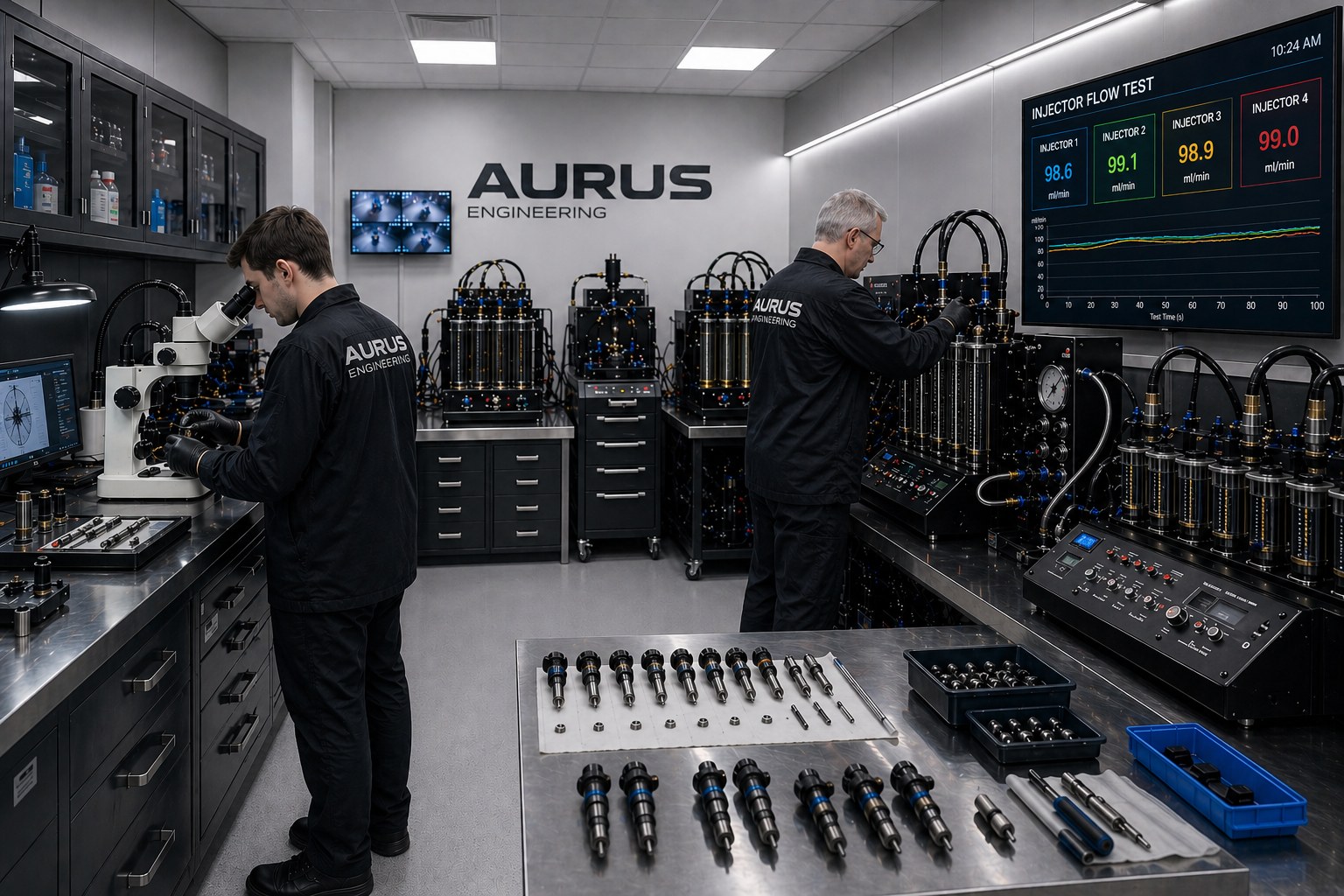
Brand-new OEM injectors are the priciest path. For most 6.0 owners, a properly remanufactured set is the smart middle ground — if it's remanned to a real standard. The catch with diesel injectors is that "remanufactured" means very different things from one supplier to the next. A quality reman replaces the wear parts, addresses the spool valve and seals that caused stiction in the first place, and flow-tests every injector so the set is balanced. A cheap "cleaned and resold" injector just brings the same problem back six months later.
That's the whole argument for buying reman from someone who actually tests them. Our diesel injector remanufacturing service rebuilds and flow-matches 6.0 HEUI injectors to OEM spec, and they ship with a warranty — which on a part this labor-intensive to install is worth a lot. If you want the background on the trade-offs, our OEM vs. aftermarket guide lays it out plainly.
6.0 Power Stroke injector replacement cost in 2026
Real numbers, not ballpark fluff:
- A set of 8 remanufactured injectors: roughly $1,000–$2,200, depending on the reman quality and whether they're stock or performance-flowed.
- Brand-new OEM set of 8: higher, often well north of $2,500 for parts alone.
- Shop labor: plan on 5+ hours, since the valve covers and a fair bit of the top end come off to reach the injectors. At typical diesel shop rates that's roughly $700–$1,200 in labor.
- All-in at a shop: most full injector jobs land between $2,500 and $3,800, parts and labor together.
A single injector can be replaced if only one has failed, but on a high-mileage 6.0 I'd think hard before doing just one. If the others are the same age and the same oil ran through all of them, you may be back in the shop soon. A balanced, flow-matched set keeps the engine running evenly and protects the work you just paid for.
While you're in there, it's smart to address the usual supporting suspects: a fresh oil change, the "blue spring" fuel pressure regulator upgrade, the STC fitting if it hasn't been done, and good fuel filters. Injectors live and die by the oil and fuel feeding them.
How to make a new set last
Three habits do most of the work. Run oil changes on time with the correct spec oil — this is the number-one defense against stiction. Keep clean fuel in it with quality filters changed on schedule. And don't ignore early cold-start symptoms; the cheapest injector repair is the one you catch before fuel ends up in the oil. Treat the 6.0 right and a good set of injectors will go a long, long way.
If you're diagnosing symptoms right now, our fuel injector symptoms guide and diagnostic trouble code guide walk through the testing in more detail, and the installation guide covers doing the job right.
Frequently asked questions
How do I know if it's stiction or a completely dead injector?
Stiction shows up cold and fades as the engine warms — rough idle and misfire at first start that smooths out after a few minutes. A truly dead injector usually misfires all the time and shows up on a buzz test or cylinder contribution test as a non-responder. Run those tests before deciding.
Can I just replace one injector on my 6.0?
You can, and it's reasonable if only one has clearly failed and the truck is lower mileage. But on a high-mileage engine where all eight have seen the same oil, replacing the full set keeps the cylinders balanced and saves you from chasing the next failure a few months later.
Will an oil additive fix sticky injectors?
Sometimes — early. A HEUI-friendly oil treatment with a fresh, correct-spec oil change can free up mild stiction and restore cold starts. Once the spool valve is worn rather than just varnished, no additive will save it and you're into replacement.
Why does my 6.0 run fine warm but terrible cold?
That's the classic stiction or FICM-voltage pattern. Cold, thick oil drags on a sticky spool valve and a weak FICM can't fire the coils cleanly, so the engine stumbles until heat thins the oil and things start moving freely.
Are remanufactured 6.0 injectors reliable?
They can be every bit as dependable as new — but only when they're remanned properly: wear parts and seals replaced, spool valve addressed, and every injector flow-tested and matched. Quality and warranty are what separate a good reman from a cleaned-up gamble, so buy from someone who tests what they sell.
Frequently Asked Questions
How do I know if it's stiction or a completely dead injector?
Stiction shows up cold and fades as the engine warms, causing a rough idle and misfire at first start that smooths out after a few minutes. A truly dead injector usually misfires all the time and shows up on a buzz test or cylinder contribution test as a non-responder. Run those tests before deciding.
Can I just replace one injector on my 6.0 Power Stroke?
You can, and it's reasonable if only one injector has clearly failed and the truck is lower mileage. But on a high-mileage engine where all eight have run the same oil, replacing the full set keeps the cylinders balanced and helps avoid chasing the next failure a few months later.
Will an oil additive fix sticky 6.0 injectors?
Sometimes, if caught early. A HEUI-friendly oil treatment with a fresh, correct-spec oil change can free up mild stiction and restore cold starts. Once the spool valve is worn rather than just varnished, no additive will save it and replacement is required.
Why does my 6.0 Power Stroke run fine warm but terrible cold?
That is the classic stiction or FICM-voltage pattern. Cold, thick oil drags on a sticky injector spool valve, and a weak FICM cannot fire the coils cleanly, so the engine stumbles until heat thins the oil and things move freely.
Are remanufactured 6.0 Power Stroke injectors reliable?
They can be as dependable as new, but only when remanufactured properly: wear parts and seals replaced, the spool valve addressed, and every injector flow-tested and matched. Quality and warranty separate a good reman from a cleaned-up gamble, so buy from a supplier that tests what it sells.